
Last Updated: November 24, 2026
Quick Summary
Some windshield cracks can be repaired from inside, but only if the damage sits on the right layer and stays small. Inside damage is harder to repair than outer-layer chips because the inner surface is harder to reach and verify. A professional inspection can confirm the layer before any repair starts.
- Confirm which glass layer is cracked before applying any resin.
- Use fingernail, parallax, and reflection checks to identify the layer.
- Do not use a DIY kit on an inside crack; it can hide spreading damage.
- Replacement is usually needed for long cracks, edge cracks, or damage in the driver’s view.
- Book a professional inspection and request a written quote before work begins.
Table of Contents
- How to Tell Whether the Crack Is on the Inside or Outside Layer
- Why Inside Windshield Glass Damage Is Different
- Windshield Repair Kit Options and Their Limits
- Step-by-Step: Assessing and Attempting an Inside Crack Repair
- Windshield Repair vs. Replacement: When Replacement Is Required
- Booking Your Next Step: Professional Inspection and Repair Cost Expectations
- Frequently Asked Questions
Most windshield cracks can be repaired, but only if the damage sits on the right layer and stays small. Drivers often ask whether windshield cracks can be repaired from inside.
Watch out: A DIY kit can seal the surface of a crack and make it look fixed while the damage keeps spreading underneath. Check the layer before you apply anything.
How to Tell Whether the Crack Is on the Inside or Outside Layer
Start by understanding what you are looking at. A windshield is laminated glass: two sheets of glass bonded to a plastic polyvinyl butyral (PVB) interlayer in the middle.
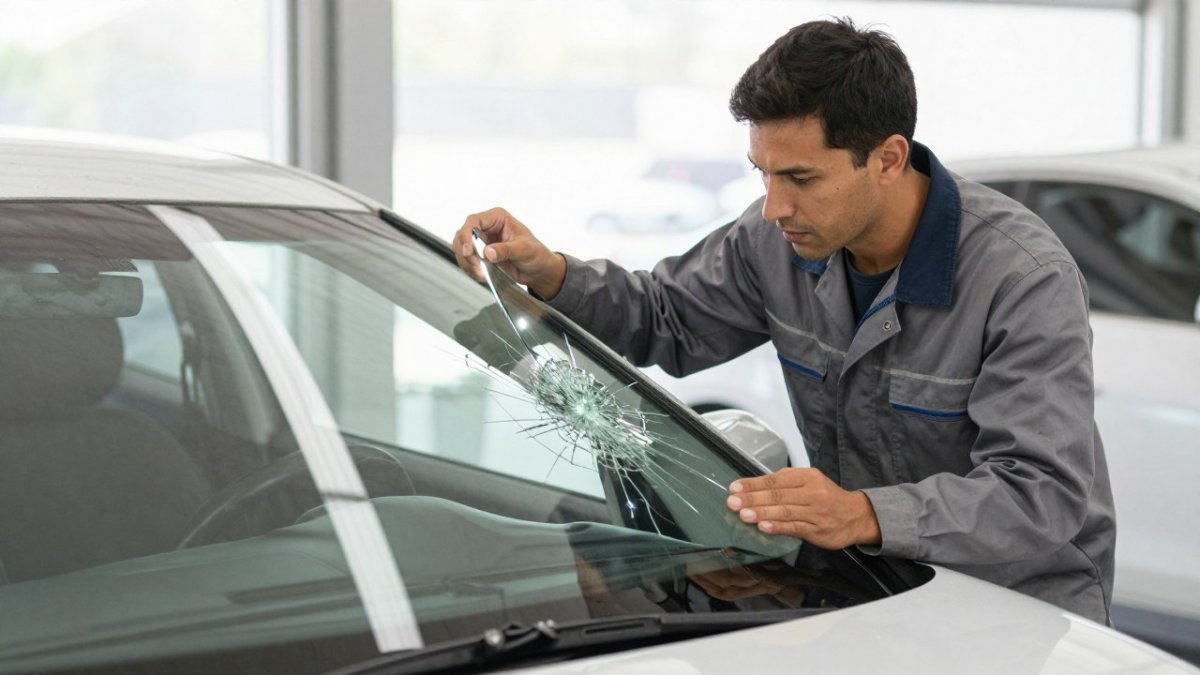
A crack you can feel with a fingernail on the outside is usually on the outer surface. A crack that only shows up when you look through the glass from inside is often on the inner surface.
Try this layered check, in order:
- Fingernail test, both sides. Run a fingernail lightly across the crack from outside, then from the cabin side. A distinct catch on one side and a smooth surface on the other is a strong clue that the damage opens on the side where you feel the catch.
- Parallax check. Look at the crack from an angle, then move your head a few inches and look again. Damage on the outer layer shifts position relative to the inner layer as your viewing angle changes; damage on the inner layer shifts the other way. This is the same effect that makes a crack look like it moves against the dashboard when you change position.
- Reflection check. Shine a flashlight at a low angle across the glass from each side. A surface crack scatters light and shows a bright, sharp line on the side where it opens. Interlayer damage tends to look cloudy or dark rather than bright.
- Contamination clue. Dirt, road film, or moisture trapped in the crack points to the outer layer, because the cabin side stays cleaner. A crack that looks clean and dry but is clearly visible from inside is more likely inner-layer or interlayer damage.
- Edge-origin check. Follow the crack to where it starts. Cracks that begin at the edge of the glass often originate from a stress point or a prior chip, and the origin tells you which surface took the impact.
Many drivers guess wrong here, and the guess usually errs toward “outer layer” because that is the surface they can reach.
Why Inside Windshield Glass Damage Is Different
Inside damage is different because the inner layer faces the cabin, and the plastic interlayer sits between the two glass sheets. When the inner sheet cracks, the repair resin has to bond to a surface that is harder to reach and harder to check. That makes it difficult to confirm the repair is complete.
Temperature changes, cabin heat, and rough driving can all make an inside crack spread. A crack that stays put in cool weather may grow after a hot afternoon with the defroster running.
Is It Safe to Drive With an Inside Crack?
Driving with an inside crack is risky if the crack is long, sits in the driver’s line of sight, or is growing. A windshield supports the roof in a rollover and helps the airbag work correctly, so any structural weakness matters. Small chips away from the driver’s view may be safe for a short drive to a repair shop. Long or spreading cracks should be inspected right away.
Stop and get the glass checked if the crack is growing, is longer than a few inches, or affects your view of the road.
Windshield Repair Kit Options and Their Limits
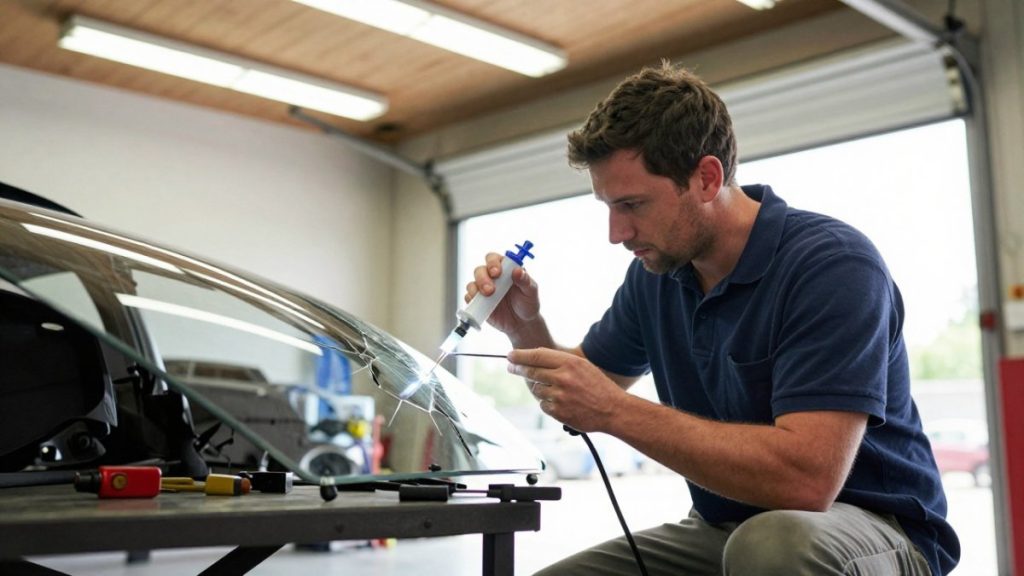
Many drivers look first at a DIY windshield repair kit. These kits usually inject a resin into a chip and cure it with UV light or sunlight.
A kit cannot tell you which layer is cracked, and it cannot guarantee the resin reaches the inner layer.
- Best for: Small, fresh chips on the outer surface, less than about an inch across
- Not suited for: Inside cracks, long cracks, damage in the driver’s view, or cracks that are growing
- Common mistake: Using a kit on a chip that is already dirty or spreading
For a professional repair service, a technician can confirm the layer, clean the damage properly, and judge whether repair is still an option.
The table below compares the main repair approaches the article describes and where each one fits.
| Option | Best for | Key difference |
|---|---|---|
| DIY repair kit | Small, fresh chips on the outer surface, under about an inch | Resin injected from the outside; cannot confirm the layer |
| DIY kit on inside crack | Not recommended | Can seal the surface while the crack keeps spreading |
| Professional repair | Confirming the layer and judging whether repair is still possible | Technician cleans the damage and assesses the layer |
| Replacement | Long cracks, inner layer damage, edge cracks, damage in the driver’s view | Restores full strength and clarity of the glass |
Step-by-Step: Assessing and Attempting an Inside Crack Repair
This outline separates what a driver can safely do from what belongs to a technician. The key difference for an inside crack is that the repair surface faces the cabin, so access, cleaning, and verification all change.
- Confirm the layer before anything else. Use the fingernail, parallax, and reflection checks. If they disagree, stop and book an inspection. Resin applied to the wrong side will not bond the opening and can trap air or dirt.
- Measure and map the damage. Note the length, the location relative to the driver’s line of sight, and whether any end of the crack reaches the edge of the glass. A crack that reaches the edge has compromised the bond at the perimeter and is generally a replacement case, not a repair case.
- Check the driver’s view. Damage in the path of the driver’s eyes is a strong reason to replace rather than repair, because even a good repair leaves a visible mark and slight optical distortion.
- Do not inject resin from the cabin side yourself. DIY kits are designed for outer-surface chips. The injection bridge needs a clean, flat, accessible surface and a vacuum path to pull resin into the damage; the cabin side is curved, close to the dashboard, and often contaminated with interior cleaners and plasticizer film. A kit used here can seal the surface and hide a crack that is still spreading.
- Clean only what you can safely reach. Remove loose glass fragments with a vacuum or a soft brush. Do not use glass cleaner, alcohol, or compressed air on an inside crack, pushing liquid or debris into the damage can contaminate the interlayer and make a later professional repair impossible.
- Book a professional inspection. A professional inspection can help confirm the layer, check whether the damage reaches the edge or the driver’s view, and assess whether the inner surface can be repaired. In many inside-crack cases the honest recommendation is replacement, because the inner glass sheet carries structural and airbag-support loads and a surface repair does not restore that strength.
- Plan for replacement if repair is not appropriate. Ask for a written quote before work begins. If replacement is likely, confirm whether the vehicle needs recalibration of the forward-facing camera or rain sensor behind the glass, many modern windshields do, and that affects both cost and scheduling.
Watch out: Never drive with a crack that is spreading, and do not use a DIY kit on an inside crack to “hold it” until your appointment, the resin can seal the surface, hide the spread, and turn a repairable chip into a replacement.
A technician’s inspection for an inside crack typically covers four things: which layer the damage opens on, whether the crack reaches the edge or the driver’s view, whether the interlayer is contaminated, and whether the inner glass sheet has lost bond with the PVB. Those four answers, not the length alone, determine whether repair is realistic.
Windshield Repair vs. Replacement: When Replacement Is Required
Repair works best for small, clean chips and short cracks on the outer layer. Replacement is the better choice when the crack is long, sits in the driver’s view, reaches the edge of the glass, or is on the inner layer and cannot be repaired safely.
Here is a simple way to think about it:
- Repair is usually possible: Small chip, outer surface, not in the driver’s view, not spreading
- Replacement is usually needed: Long crack, inner layer damage, crack reaching the edge, damage in the driver’s view, or a crack that keeps growing
Replacement restores the full strength and clarity of the glass. A repair that fails later can leave you with the same problem and more expense.
Booking Your Next Step: Professional Inspection and Repair Cost Expectations
The best next step is a professional inspection. A technician can confirm which layer is cracked, measure the damage, and tell you whether a repair is safe. Pricing depends on the vehicle, the type of glass, and the extent of the damage, so request a quote from USA Auto Glass & Batteries before work begins.
Many drivers ask whether insurance covers this work. Coverage depends on your policy, so check with your insurer before booking.
To get a clear answer on your windshield, request a free quote from USA Auto Glass & Batteries. You can also learn how soon a chip should be fixed before it spreads, or compare a professional repair with a DIY kit to see which fits your damage. If replacement looks likely, get a free replacement quote so you can plan the next step.
Frequently Asked Questions
Can a windshield crack be repaired from the inside?
Usually not in the way people expect. Most repair resins are injected into outer-layer chips and cracks, and the resin needs to reach the damaged glass to bond. A crack on the inside layer of laminated glass is harder to reach and often cannot be fixed to the same standard. A professional technician can inspect the damage, confirm which layer is affected, and tell you whether a repair is realistic or whether the windshield should be replaced. Do not assume an inside crack can be fixed with a home kit.
How can I tell whether a windshield crack is on the inside or outside?
Look at the crack from several angles and feel it with a fingernail. Damage on the outer surface often feels rough or chipped, and it may catch dirt. Damage on the inner surface tends to be smooth, and condensation or film may collect in it. Run a fingernail across the crack from the inside; if you can feel it on the cabin side, the inner layer is involved. If you are unsure, a technician can confirm the layer during an inspection.
What windshield repair kit options are available for inside damage?
Most consumer windshield repair kits use a resin injector and UV curing light designed for outer-layer chips and short cracks. These kits are not designed for inner-layer damage, and results vary widely. Using a kit on the wrong layer can trap resin, leave a visible blemish, or fail to stop the crack from spreading. Be cautious with any kit that claims it can repair the inside of laminated glass. Pricing depends on the vehicle, the damage, and your insurance coverage, so request a quote for your specific windshield.
Is it safe to drive with a crack on the inside of the windshield?
Driving with an inside crack is risky until the glass has been inspected. Cracks can spread from temperature changes, road vibration, or impacts, and a spreading crack can reduce structural support in the windshield, which matters in a collision or rollover. A crack that crosses your line of sight can also affect visibility, especially at night. Have a technician inspect the damage promptly and avoid high-speed driving until you know how serious it is.