
Last Updated: October 23, 2026
Quick Summary
Car window replacement is necessary when glass is shattered, cracked, won’t roll up or down, or when the regulator mechanism is damaged. The DIY process typically takes 2-4 hours and involves removing the door panel, disconnecting the old glass, installing new glass with adhesive, and reassembling components.
- Professional car window replacement takes 30-60 minutes compared to 2-4 hours for DIY work
- A basic sedan side window costs $200-$500 to replace, while luxury vehicles can exceed $1,000
- Do not open or close the window for 24 hours after installation to allow adhesive to cure properly
- Modern vehicles with ADAS features require specialized recalibration after windshield replacement to ensure safety systems function correctly
- Essential tools include socket sets, panel removal tools, glass removal tools or suction cups, and automotive-grade adhesive
Table of Contents
- When Car Window Replacement Is Necessary
- How to Replace a Car Window: Tools and Materials You’ll Need
- Step-by-Step Car Window Replacement Instructions
- Car Window Replacement Cost Factors
- Mobile Auto Glass Replacement: When to Choose Professional Service
- ADAS Recalibration After Windshield Replacement
- Post-Installation Care and Curing Time
- Frequently Asked Questions
When Car Window Replacement Is Necessary
A broken or damaged car window is more than an inconvenience, it’s a safety issue.
Most damage falls into two categories: windshield damage and side window damage. Windshields protect you from wind and debris while providing structural support to your vehicle. Side windows (doors and rear) protect your privacy, security, and comfort.
You need car window replacement when:
- The glass is shattered or has large cracks
- The window won’t roll up or down
- The regulator (the mechanism that moves the window) is damaged
- Weather seals are broken, causing leaks
- Safety features like ADAS sensors are compromised on the windshield
Small chips in a windshield can sometimes be repaired. But once damage spreads or affects the driver’s line of sight, replacement is the only safe option.
If your window broke suddenly, check whether your insurance covers glass damage. Many policies include comprehensive coverage for windshield and window replacement, sometimes with little or no out-of-pocket cost.
How to Replace a Car Window: Tools and Materials You’ll Need
Replacing a car window yourself is possible if you have the right tools and follow safety protocols. The process requires precision, patience, and the correct equipment. Rushing or using the wrong tools can damage your door frame or injure your hands.
Essential Tools for DIY Window Replacement
Before you start, gather everything you need. Working without the proper tools will make the job harder and riskier.
You’ll need:
- Socket set and wrenches, for removing door panel bolts
- Panel removal tools, plastic pry bars or trim removal tools (not metal, which scratches)
- Screwdrivers, both Phillips and flathead
- Wire cutters, for disconnecting window regulator clips
- Glass removal tool or suction cups, to safely lift the new glass into place
- Gasket seal or adhesive, automotive-grade adhesive for the window frame
- Weatherstripping, replacement seals if the old ones are damaged
- Gloves and safety glasses, non-negotiable for protecting your hands and eyes
Safety Precautions Before You Start
Working with broken glass and mechanical components requires serious safety measures. One mistake can cause cuts, eye injuries, or damage to your vehicle’s electrical systems.
Follow these precautions:
- Disconnect the negative battery terminal, This prevents accidental electrical shorts when you’re removing the door panel
- Wear heavy-duty gloves and eye protection, Broken glass has razor-sharp edges
- Work in a well-lit area, You need clear visibility of small clips, bolts, and electrical connectors
- Remove all broken glass carefully, Place shards in a sealed container away from your work area
- Support the window regulator, The regulator mechanism can snap back suddenly if not properly secured
- Never force components, If something doesn’t move easily, stop and reassess rather than risk breaking it
Do not attempt this repair if you have no mechanical experience or your vehicle has advanced safety features like side-impact airbags connected to the door panel. Incorrect reassembly can disable critical safety systems. Professional service is safer in these cases.
Step-by-Step Car Window Replacement Instructions
Replacing a car window involves removing the door panel, disconnecting the old glass, installing the new pane, and reassembling everything. The process typically takes 2-4 hours for a DIYer.
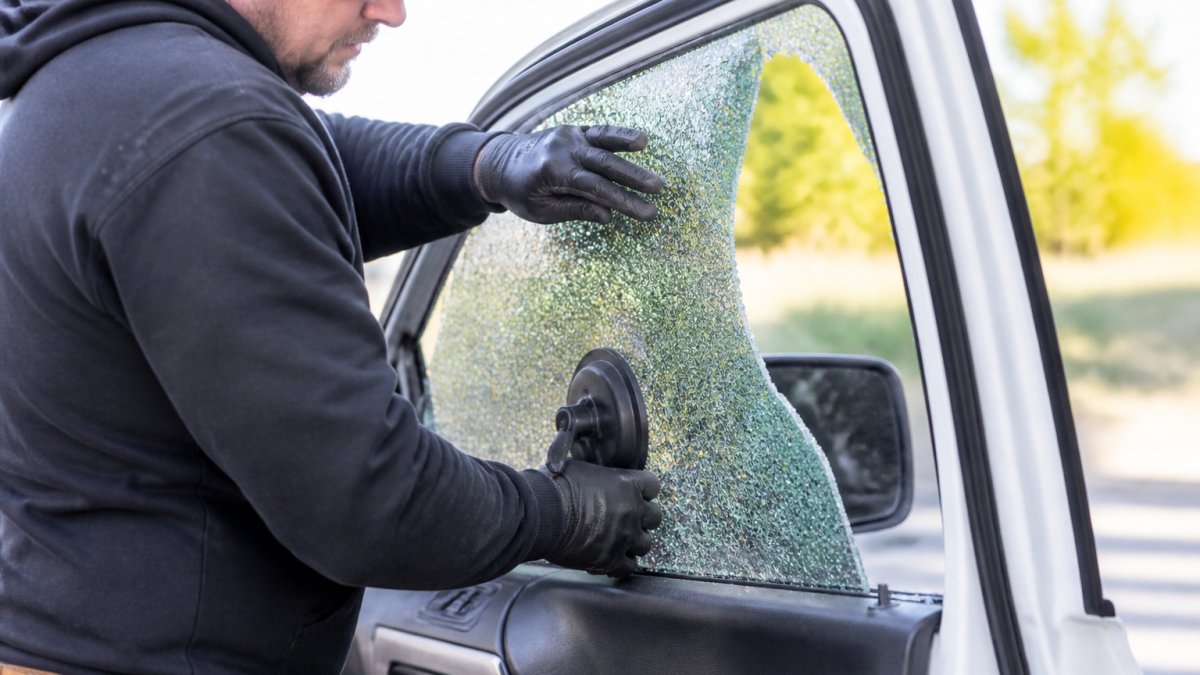
Step 1: Remove the Door Panel and Window Regulator
Start by removing the door panel to access the window regulator and mounting points. This step exposes the internal mechanisms that hold the glass in place.
First, disconnect the negative battery terminal using a wrench. Then locate all the bolts and clips holding the door panel.
Once you’ve removed all bolts, carefully pull the door panel away from the frame. You’ll see electrical connectors for power windows, locks, and speakers.
Next, locate the window regulator, the mechanism with tracks and a motor that moves the window up and down.
Time: 20-30 minutes
Step 2: Disconnect and Remove the Broken Glass
With the regulator exposed, you can now remove the broken glass.
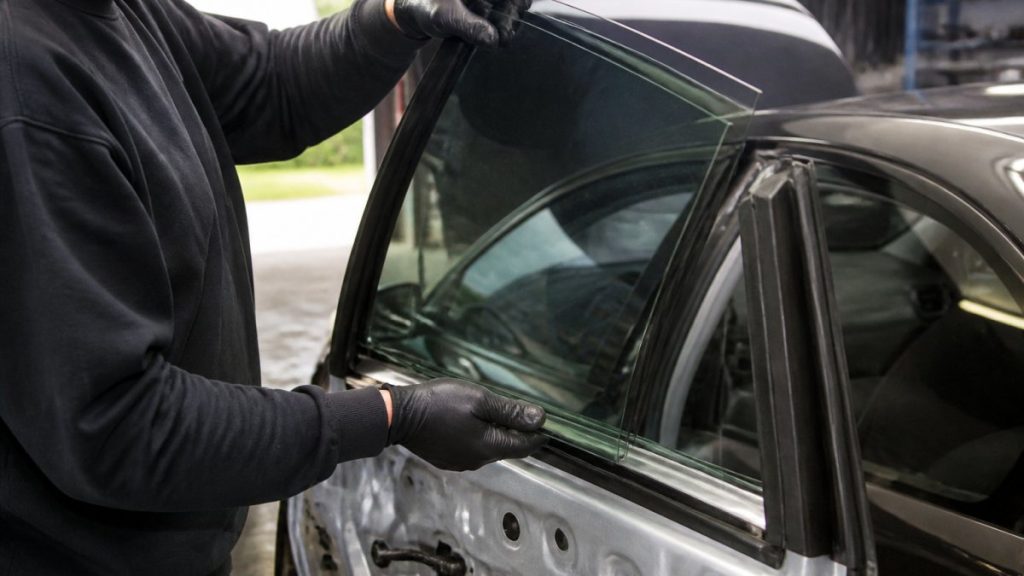
Use your glass removal tool or suction cups to grip the glass firmly. Gently pull upward while applying steady pressure. The gasket will resist at first.
Inspect the frame for remaining adhesive or gasket material. Use a plastic scraper to remove old sealant. Clean the frame thoroughly with a lint-free cloth.
If the gasket is damaged, remove it completely and prepare to install a new one.
Time: 15-20 minutes
Step 3: Install the New Window Glass
This is the most critical step. Proper alignment ensures your window rolls smoothly and seals correctly.
Apply a thin, even bead of automotive adhesive around the frame where the gasket will sit.
Position the new glass carefully. Lower it slowly into the frame, checking alignment as you go. The glass should sit flush with the door surface.
Allow the adhesive to cure for the time specified on the product, usually 24 hours. Do not open or close the window during this period.
Time: 10-15 minutes (plus 24-hour cure time)
Step 4: Reassemble the Door Panel and Test
Once the adhesive has fully cured, reconnect the window regulator. Bolt it back into place and connect the electrical connector. Test the window motor to ensure it operates smoothly through its full range of motion.
Reconnect the door panel electrical connectors for power windows, locks, and speakers. Carefully align the panel with the frame and press it into place. Install all bolts and trim covers. Reconnect the negative battery terminal.
Test all door functions: windows, locks, and speakers. Roll the window up and down several times to confirm smooth operation and proper sealing.
Time: 15-20 minutes
Professional car window replacement takes 30-60 minutes because technicians have specialized tools and years of experience. DIY replacement typically takes 2-4 hours and requires careful attention to alignment and adhesive cure time.
The window replacement process breaks down into four main steps, each with its own time requirement.
| Step | Task | Time Required |
|---|---|---|
| 1 | Remove door panel and window regulator | 20-30 minutes |
| 2 | Disconnect and remove broken glass | 15-20 minutes |
| 3 | Install new window glass | 10-15 minutes plus 24-hour cure |
| 4 | Reassemble door panel and test | 15-20 minutes |
Car Window Replacement Cost Factors
The cost of car window replacement varies significantly based on several factors. Understanding these factors helps you budget appropriately and make informed decisions. Find answers to common questions about costs, the replacement process, and professional service.
Vehicle type matters most. According to AutoZone’s automotive glass pricing guide, vehicles with advanced driver assistance systems (ADAS) can exceed $1,000 for windshield replacement alone because the glass contains embedded sensors that must be recalibrated after installation.
Glass quality affects price. OEM (original equipment manufacturer) glass matches your vehicle exactly but costs more.
Location and labor also factor in.
Insurance coverage can eliminate or reduce your out-of-pocket cost. Many comprehensive policies cover glass damage with a deductible of $0-$500. Check your policy details before paying out of pocket.
IBISWorld’s 2026 auto glass market analysis shows the U.S. auto windshield repair services market valued at $8.9 billion, reflecting the significant demand for these services across the country.
For a free quote on your specific vehicle, request a free quote to see exact pricing for your situation.
Mobile Auto Glass Replacement: When to Choose Professional Service
Car window replacement doesn’t always require a DIY approach. Professional mobile service offers speed, safety, and warranty protection that DIY work cannot match.
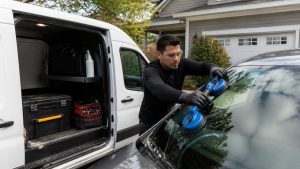
Mobile auto glass replacement means a technician comes to your location, home, work, or roadside, with all necessary equipment and materials.
Choose professional service when:
- Your vehicle has ADAS features requiring recalibration
- The damage is severe or involves structural components
- You lack mechanical experience or proper tools
- You need same-day or emergency service
- You want a warranty on the work performed
- Your insurance covers professional replacement
They use high-grade adhesives, proper curing equipment, and quality glass that meets safety standards.
USA Auto Glass & Batteries provides mobile car window replacement across the Puget Sound region with same-day availability.
View our services to see the full range of glass repair and replacement options we offer. Schedule an appointment for same-day or next-day service in your area.
ADAS Recalibration After Windshield Replacement
Modern vehicles rely on advanced driver assistance systems (ADAS) for safety features like lane-keeping assist, adaptive cruise control, and collision avoidance. These systems use cameras and sensors embedded in the windshield.
When you replace a windshield, the sensors must be recalibrated. Even a slight misalignment can cause these safety features to malfunction.
ADAS recalibration requires specialized equipment and training. The process involves:
- Mounting the vehicle on a calibration rack
- Running diagnostic software to detect the system
- Adjusting camera angles and sensor positions
- Testing the system through a series of scenarios
- Confirming all safety features function correctly
Recalibration typically takes 1-2 hours depending on your vehicle’s complexity.
Skipping recalibration is dangerous. Your safety features won’t work as designed, putting you and your passengers at risk.
Post-Installation Care and Curing Time
After car window replacement, proper care during the curing period is essential. The adhesive needs time to set fully before the window experiences stress.
For the first 24 hours after installation:
- Do not open or close the window
- Avoid driving, especially on rough roads
- Do not slam the door
- Keep the window rolled up
- Do not wash the vehicle
The adhesive typically cures within 24 hours, but full strength develops over 48-72 hours.
After the window is fully cured:
- Test it through its full range of motion
- Check for smooth operation and proper sealing
- Listen for wind noise or rattling
- Inspect the seal for gaps or leaks
If you notice issues after the cure period, contact the shop immediately. Professional installations come with warranties covering defects or improper sealing.
Regular maintenance keeps your window in good condition. Clean the glass and seals periodically. If you notice any cracks or chips developing, address them quickly before they spread.
Frequently Asked Questions
How much does car window replacement cost?
Car window replacement pricing depends on your vehicle make and model, glass type, and whether the window has advanced features like power regulators or sensors. For vehicles with advanced driver assistance systems (ADAS), costs can increase significantly due to recalibration requirements. Contact USA Auto Glass & Batteries for a free quote tailored to your specific vehicle and damage.
Can I drive my car with a broken window?
Driving with a broken window is unsafe. A broken window compromises vehicle security, exposes occupants to weather and debris, and can affect structural integrity in a collision. If your windshield is damaged, visibility is impaired, creating a serious safety hazard. Side windows should also be replaced promptly. USA Auto Glass & Batteries offers same-day mobile service to get your vehicle back on the road safely.
Does replacing a windshield require ADAS recalibration?
Many modern vehicles with advanced driver assistance systems require ADAS recalibration after windshield replacement. These systems rely on cameras and sensors mounted on or behind the windshield to function properly. Skipping recalibration can disable safety features like lane-keeping assist and automatic emergency braking. USA Auto Glass & Batteries specializes in ADAS recalibration to ensure your vehicle’s safety systems work correctly after replacement.
How long does it take to replace a car window?
After installation, adhesive and sealant require curing time, usually 24 hours before the vehicle is fully safe to drive. Mobile auto glass services from USA Auto Glass & Batteries minimize downtime with efficient, on-site installation.
Replacing a car window involves real risks if you lack experience or proper tools. Whether you choose DIY or professional service, prioritize safety and proper technique. USA Auto Glass & Batteries delivers expert car window replacement with ADAS recalibration and same-day availability across the Puget Sound region. Schedule an appointment today for reliable, affordable service backed by our satisfaction guarantee.