
Last Updated: November 22, 2026
Quick Summary
A technician removes the old windshield by cutting its urethane adhesive and lifting the glass out, then cleans the frame, sets the new glass, and lets the adhesive cure. A typical windshield replacement takes about one to two hours, and you should wait at least one hour before driving unless the technician says otherwise.
- Technicians cut the urethane adhesive with a special tool or wire, taking care not to damage the body frame.
- Any remaining urethane is scraped off so the new glass sits on a clean surface for a leak-free seal.
- Proper alignment keeps the gap even and protects the seal.
- Many newer vehicles need the windshield camera recalibrated, using static or dynamic methods.
- Avoid slamming doors, car washes, and rough roads until the adhesive is fully set.
Table of Contents
- Chip or Crack: Deciding Whether You Need Repair or Replacement
- Step 1: Booking and Preparing Your Vehicle
- Step 2: Removing the Old Windshield
- Step 3: Installing and Bonding the New Glass
- How Long Does Windshield Replacement Take, and When Can You Drive?
- ADAS Recalibration After Windshield Replacement
- Windshield Replacement Aftercare: What to Avoid in the First Days
- Booking Your Replacement With USA Auto Glass & Batteries
- Frequently Asked Questions
Chip or Crack: Deciding Whether You Need Repair or Replacement
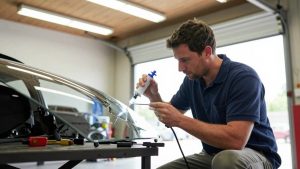
A small chip can often be repaired, but the window to fix it is short. Most windshield damage starts as a stone impact, and whether you need repair or replacement comes down to measurable factors: size, depth, number of impact points, location relative to the edge, and whether the damage sits in the driver’s sightline. A professional inspection is still the starting point, but you can make a more informed call before you book.
A practical repairability guide
Use these thresholds as a rough screen, not a verdict. Damage inside these limits is generally considered a good repair candidate:
- Size: chips roughly the diameter of a quarter or smaller, and cracks shorter than a few inches, are usually repairable. Larger damage is more likely to need replacement.
- Depth: damage that penetrates only the outer glass layer (a typical stone chip) is more repairable than damage that reaches the inner layer or passes through both.
- Number of impact points: a single chip is easier to repair than a cluster of several impacts close together, which can weaken the surrounding glass.
- Edge proximity: damage within a few inches of the windshield edge is a poor repair candidate because the edge is where the glass flexes and bonds to the frame; edge cracks almost always call for replacement.
- Driver sightline: damage directly in the driver’s primary view is harder to repair cleanly and may need replacement even when it is small, because a visible repair scar can distract the driver.
If the damage fails two or more of these screens, plan on replacement. If it passes most of them, a repair is likely worth pursuing quickly.
The first hour after a chip
What you do immediately after an impact affects whether the chip stays repairable:
- Keep it clean and dry. Cover the chip with a clean, dry piece of tape or a chip cover to keep out moisture and grit. Do not press hard on the glass.
- Document it. Photograph the chip with a coin or ruler for scale, note the date and location, and save the photo. This helps the technician assess it and supports any insurance claim.
- Avoid temperature shock. Do not run the defroster on high directly at the chip, and avoid pouring hot or cold water on the glass. Rapid temperature change is a common way a chip spreads.
- Skip the car wash and rough roads until the chip is assessed. High-pressure water and vibration can push a chip into a crack.
- Arrange an assessment promptly. Book a repair within a few days rather than waiting for it to spread.
Temporary protection is not repair
A clean, dry chip cover or a piece of tape can keep moisture and dirt out for a short time, but it does not restore the glass. Tape and covers are a bridge to a real repair, not a substitute for one.
What makes damage worse
Waiting on a chip lets several forces work against you. Temperature swings expand and contract the glass, and a chip concentrates that stress. Road vibration and slamming doors flex the windshield. Moisture and dirt entering the chip can cloud the damage and reduce the chance of a clean repair. Direct sunlight and a hot dashboard heat the glass unevenly.
Watch out: if the damage is in the driver’s sightline or within a few inches of the edge, do not wait to see whether it spreads, get it assessed, because those locations are the least likely to be repairable and the most likely to compromise safety.
Step 1: Booking and Preparing Your Vehicle
Booking is the first step in the process. A technician will confirm your vehicle year, make and model, and whether it has cameras or sensors behind the glass. That detail matters because it can affect the appointment length and whether recalibration is needed.
Before the technician arrives, move personal items out of the front seats and clear the dashboard. Park in a spot where the technician can open the doors and reach the windshield easily.
Ask the crew to confirm the part they are ordering and whether your insurance will cover the job.
The process follows a clear sequence, from preparation through installation, so here is what happens at each stage.
| Step | What the technician does | Time or note |
|---|---|---|
| Booking | Confirms year, make, model and camera or sensors | Can affect appointment length |
| Prepare vehicle | Move personal items; clear dashboard | Park where doors and glass are reachable |
| Remove old glass | Protect paint, cut urethane, lift glass out | Rushed cut can damage body frame |
| Clean frame | Scrape remaining urethane from frame | Clean surface needed for leak-free seal |
| Install new glass | Set and align glass for even gap | Alignment protects the seal |
| Cure adhesive | Urethane cures before driving | Technician gives exact wait time |
Step 2: Removing the Old Windshield
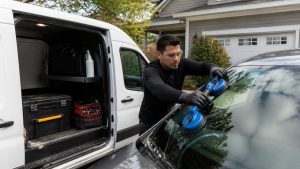
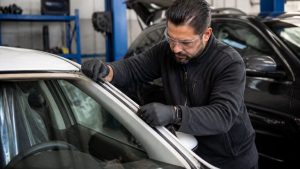
The technician starts by protecting the paint and dashboard with covers. Then they cut the urethane adhesive that holds the old glass in place, using a special cutting tool or wire. This step takes care, because a rushed cut can damage the body frame.
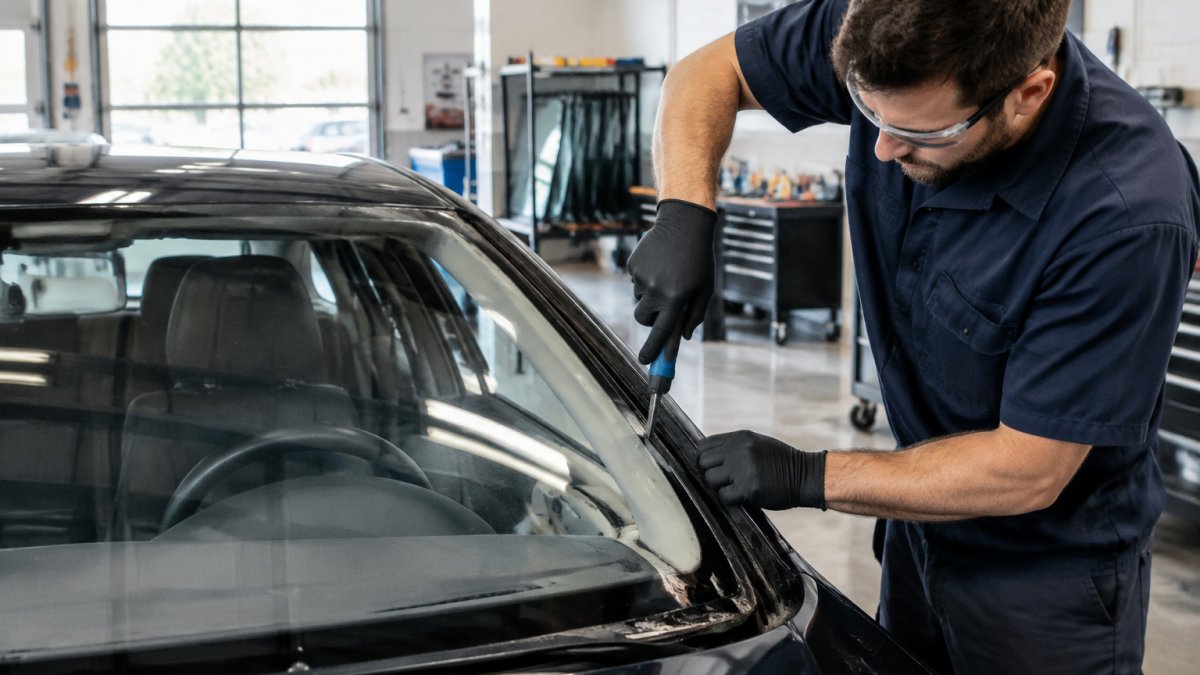
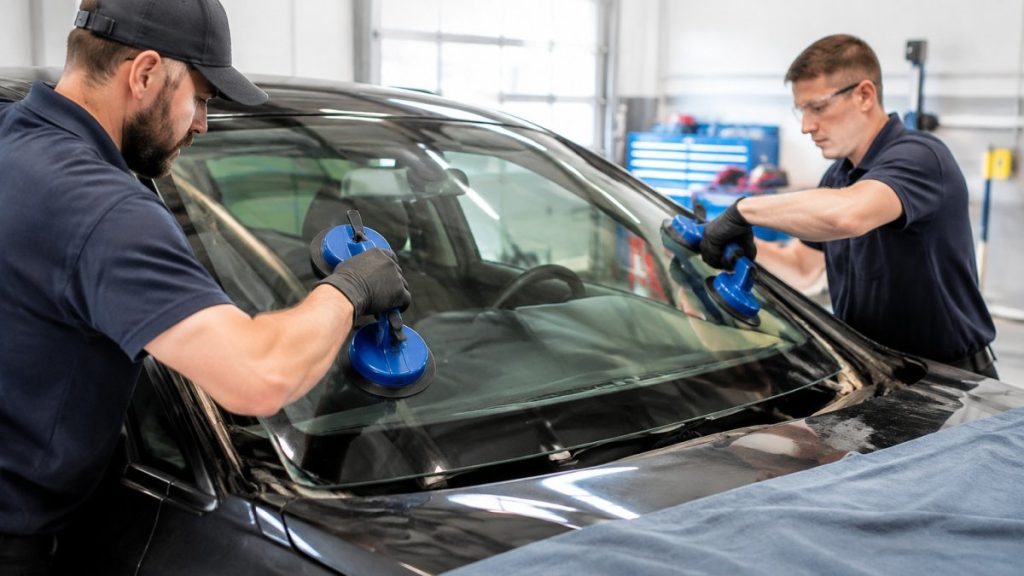
Once the seal is cut, the glass is lifted out. Any remaining urethane is scraped from the frame so the new glass sits on a clean surface. Clean bonding surfaces are essential for a strong, leak-free seal.
Watch out: if the frame is rusted or bent, the new glass may not seal properly, so ask the technician to check the body before they continue.
Step 3: Installing and Bonding the New Glass
The new glass is then set into place and aligned carefully. Proper alignment keeps the gap even and protects the seal.
The urethane must cure before the car is safe to drive. Curing depends on temperature, humidity and the adhesive used, so the technician will tell you the exact wait time for your vehicle.
How Long Does Windshield Replacement Take, and When Can You Drive?
A typical replacement takes about one to two hours, depending on the vehicle and any extra steps like recalibration. Most drivers can leave once the glass is installed, but you must wait for the adhesive to cure. A common guideline is to avoid driving for at least one hour, though some adhesives need longer, so follow the technician’s instructions. You can learn more about how soon you can drive after replacement in our dedicated guide.
ADAS Recalibration After Windshield Replacement
Many newer vehicles use a forward-facing camera mounted at or near the top of the windshield for driver-assistance features such as lane departure warnings, lane-keeping assist, automatic emergency braking, and adaptive cruise control. Because that camera looks through the glass, replacing the windshield changes its optical reference. Even a small shift in camera angle or position can throw off the system’s aim, so the camera often needs recalibration after the new glass is installed.
Which systems depend on the windshield camera
The exact list varies by vehicle, but features that commonly rely on a windshield-mounted camera include:
- Lane departure warning and lane-keeping assist
- Automatic emergency braking and forward collision warning
- Adaptive cruise control that follows the vehicle ahead
- Traffic sign recognition
- Automatic high-beam control
If your vehicle has any of these, ask before booking whether the manufacturer calls for recalibration after a windshield replacement. Some vehicles require it; others do not, and the answer is specific to your year, make, model, and option package.
Static versus dynamic calibration
There are two common calibration methods, and which one applies depends on the vehicle:
- Static calibration uses a target or array of targets placed at a measured distance in front of the vehicle in a controlled space. The technician aims the camera at the targets and lets the system relearn its reference point. This typically requires a dedicated bay with controlled lighting and floor space.
- Dynamic calibration is done by driving the vehicle on a road at specified speeds and conditions so the system can relearn from the real environment. It requires a test drive and specific road and lighting conditions.
Some vehicles need both.
What happens if calibration is skipped
An uncalibrated camera can leave safety features working poorly, a lane-keeping system that pulls toward a lane line, a forward collision warning that triggers late or not at all, or an automatic braking system that misjudges distance. The vehicle may also display a warning light or disable the affected features until calibration is completed. These are safety systems, so calibration is not a step to defer.
Plan for the time and cost
Recalibration may add time to the appointment, so it should be part of your plan before the work begins. When you book, confirm whether your vehicle requires calibration. If your insurer is involved, ask whether calibration is covered under the claim.
Watch out: if a shop cannot perform the calibration your vehicle requires, do not let the replacement proceed without a plan for who will calibrate it afterward, driving with an uncalibrated camera can leave safety features unreliable.
Windshield Replacement Aftercare: What to Avoid in the First Days
Keep the car’s windows cracked slightly and avoid slamming doors for the first day, since pressure changes can push on fresh adhesive. Skip car washes, and do not touch the edges of the glass. Avoid driving through deep water or on rough roads until the adhesive is fully set.
Ask what guarantee applies to both the glass and the labor before you leave.
Booking Your Replacement With USA Auto Glass & Batteries
USA Auto Glass & Batteries offers mobile replacement across the Puget Sound area, so you can get service where you park. Our team can confirm your damage, check whether insurance may cover the job, and schedule recalibration when your vehicle needs it. Call for a free quote or request a free quote to see pricing for your vehicle, and review our lifetime warranty for details on coverage after installation.
Frequently Asked Questions
How long does windshield replacement take?
Most windshield replacements take about one to two hours from the start of removal to the finished installation. The bulk of that time goes to removing the old glass, prepping the frame, and setting the new windshield. The urethane adhesive then needs time to cure before the vehicle is safe to drive, which is why the appointment itself is shorter than the total time before you can drive normally. Vehicles with ADAS sensors may need extra time for recalibration afterward.
Can I drive my car immediately after windshield replacement?
Usually not right away. The urethane bond needs time to cure, and the safe drive-away time depends on the adhesive used, weather, and humidity. Technicians typically give a specific waiting period at the appointment, and that guidance should be followed closely. Driving too early can weaken the seal and the structural bond between the glass and the frame. Ask the technician for the exact drive-away time for your vehicle before you leave the shop.
Does windshield replacement include ADAS recalibration?
It can, depending on your vehicle. Many newer vehicles use cameras mounted near the windshield for lane departure warnings, automatic emergency braking, and similar driver assistance features. When the glass is replaced, those cameras may need recalibration so they read the road correctly. Not every replacement requires it, so ask whether your vehicle’s sensors need calibration before the appointment. USA Auto Glass & Batteries offers ADAS re-calibration services.
Is a windshield chip repairable or does it need replacement?
Small chips are often repairable, especially when they are smaller than a quarter and not located directly in the driver’s line of sight. Cracks longer than a few inches, damage at the edge of the glass, or damage that has spread generally need replacement. Because chips can grow with temperature changes and road vibration, having a chip assessed early gives you the most repair options. A professional inspection is the most reliable way to decide between repair and replacement.